
Common Quail
Family: Phasianidae (Partridges & Allies)
English Name: Common Quail
Scientific Name: Coturnix coturnix
Conservation Status: LC
Arabic Name: سُمَّانَى شَائِعَةٌ
Status in Kuwait: is a common passage migrant and scarce summer visitor, with breeding confirmed on several occasions — the first record dating back to 1967 at Ahmadi, followed by further breeding at Sulaibiya’s pivot irrigation farms, Abdaly farms in 2000, and Wafra farms. Spring migration is the best window to catch this elusive, ground-dwelling species moving through Kuwait’s farmland, and it’s one of the species we regularly encounter on the Spring Tours.
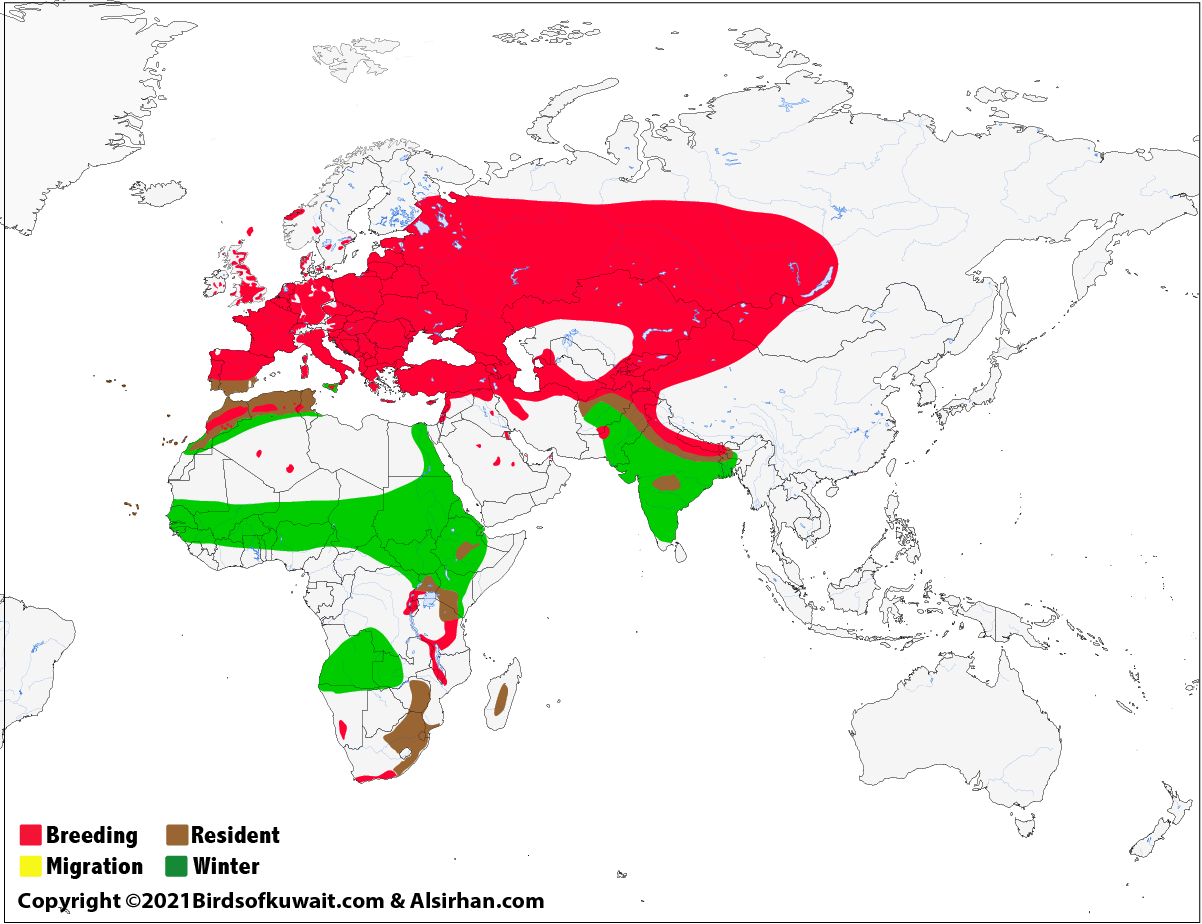
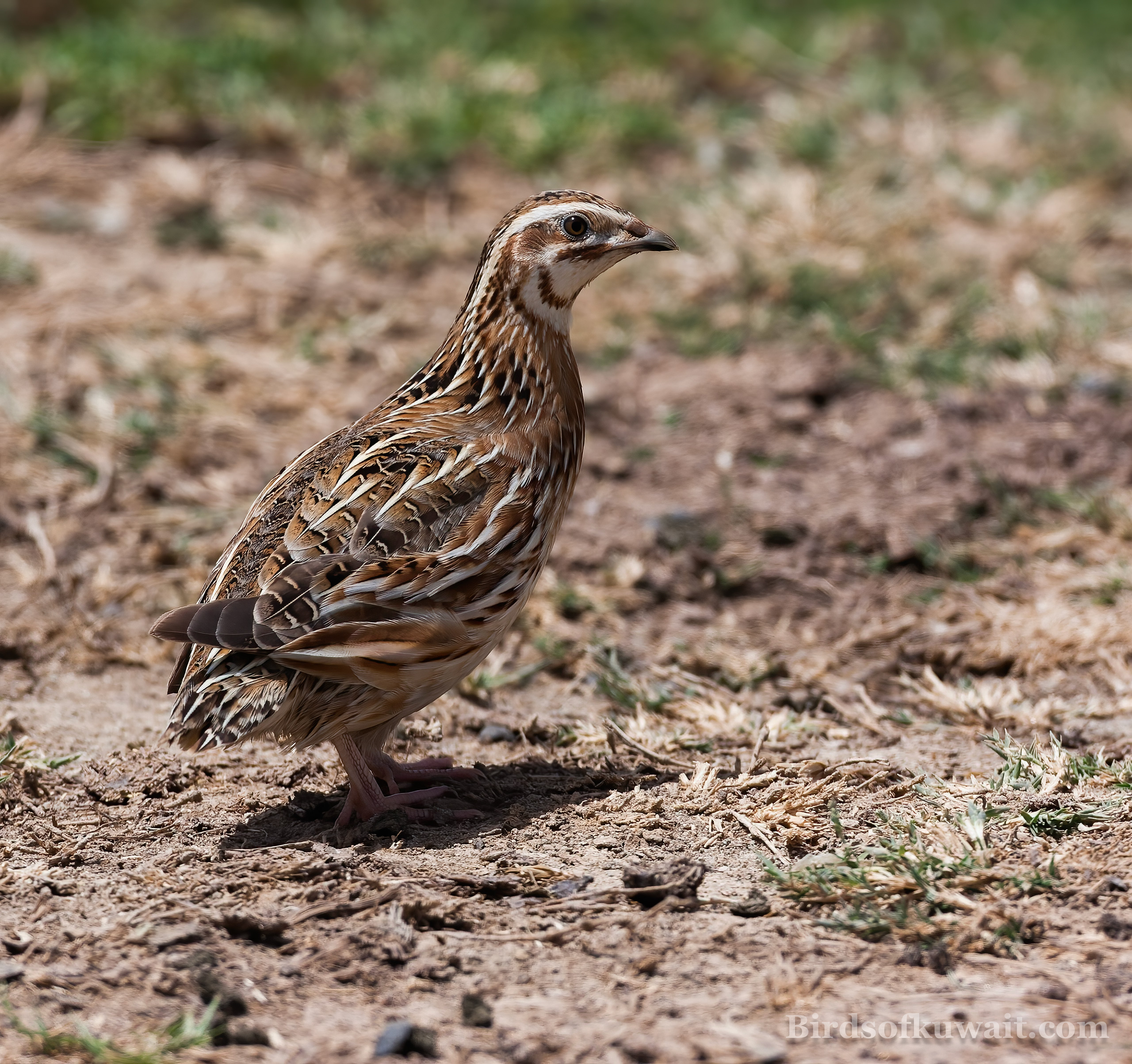
Globally, the nominate subspecies coturnix breeds from Europe and north-west Africa across to Mongolia and north-east India, wintering in Africa and central and southern India. Four further subspecies are recognised: conturbans in the Azores, inopinata in the Cape Verde Islands, africana across sub-Saharan Africa, Mauritius, Comoros and Madagascar, and erlangeri in East and North Africa — some of which may eventually be split as full species. If you’d like to see Quail and Kuwait’s other migrants in the field, take a look at my guided birdwatching tours.
Beyond being a delight to spot, Common Quail play a real ecological role. They keep insect numbers — beetles, ants, grasshoppers — in check across farmland and grassland, disperse weed and grain seeds through their droppings, and form an important food source for raptors, snakes and small mammals, making their presence a useful gauge of a habitat’s overall health.
They’re also remarkable migrants for a bird in the pheasant family: despite their stocky build, quail have long wings built for real distance, and they travel almost entirely at night, flying low to avoid predators and the day’s heat — a habit that unfortunately also makes them vulnerable to light pollution, building strikes, and net-trapping along the way. Populations move along four broad flyways between their European and Asian breeding grounds and their African wintering areas, and Kuwait sits on the Near-East route, the corridor used by birds breeding across Eastern Europe and Western Asia as they head toward Egypt and beyond. Rather than one direct journey, many quail breed in stages, starting in North Africa or southern Europe in early spring, then pushing further north to raise a second or third brood as the season progresses.
That Near-East corridor is exactly why spring passage through Kuwait can be so productive — one of the highlights of the Spring Tour. If you’d like to experience quail passage and Kuwait’s other migrants for yourself, take a look at the full range of guided birdwatching tours on offer.